
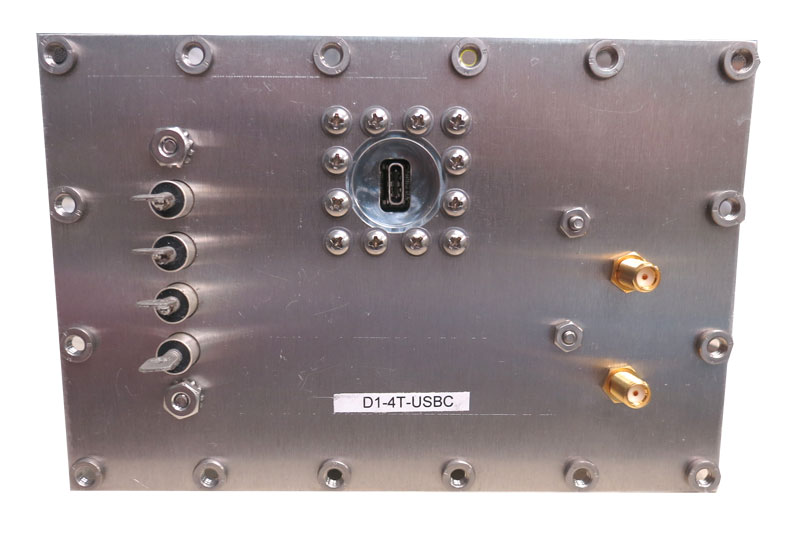
Fast Track Populated I/O Plate — JRE D1-4T-USBC
Type D Fast Track plate with 1 USB-C interface, 2 SMA Female bulkheads, and a 4 Terminal filtered feed through.
JRE D1-4T-USBC specifications
- Part Number
- D1-4T-USBC
- SMA Connectors
- 2 SMA Female bulkhead connectors
- Filtered Interface
- 1 USB-C filtered interface
- Terminal Feed Through
- 1 4 Terminal filtered feed through rated at 250VAC/20A max, 100VDC/20A max
- Plate Size
- Type "D" I/O plate
JRE D1-4T-USBC overview
The JRE D1-4T-USBC is a populated Type D I/O plate carrying USB-C, filtered power and RF paths. It keeps those crossings together when USB-C is the anchor for the Type D configuration.
- 1 USB-C filtered interface for the data connection through the shielding barrier
- USB-C path discriminating differential data from common-mode RF
- 2 SMA Female bulkhead connectors for controlled RF paths to the DUT
- 1 4 Terminal filtered feed through rated 250VAC/20A max or 100VDC/20A max
- In-stock plate that can be replaced later with simple hand tools
At $725.00, the value is in having the listed interfaces populated and ready rather than engineering a one-off plate. Pair it with an in-stock enclosure when delivery in days matters. The connector shape alone should not decide the build: the USB-C path and every surrounding RF and power crossing must match the bench setup.
Go deeper
- Interface Connector Guide Compare rejection and data-rate details for JRE USB 2, USB 3, USB-C, LAN, fiber and DB filtered I/O, then specify the right interface plate for an enclosure.
- Why Filtered I/O? What One Unfiltered Cable Does to a Shielded Enclosure See why a small empty hole leaks little RF but one unfiltered wire can reduce a −100 dB enclosure to −40 or −60 dB: a conductor has no cutoff frequency.


Tell us what connections your device needs.
Tell us what connections you need to your device under test — USB, Ethernet, RS-232, RF connectors, etc. We'll spec it out with you. No cart, no checkout: you send an inquiry and we quote it.
Ask an Engineer