
RF Shielded Test Enclosure — Benchtop — JRE 1618
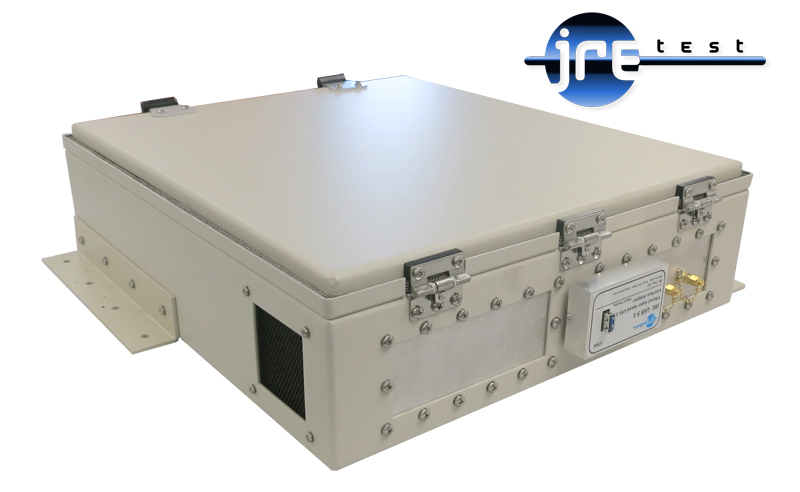
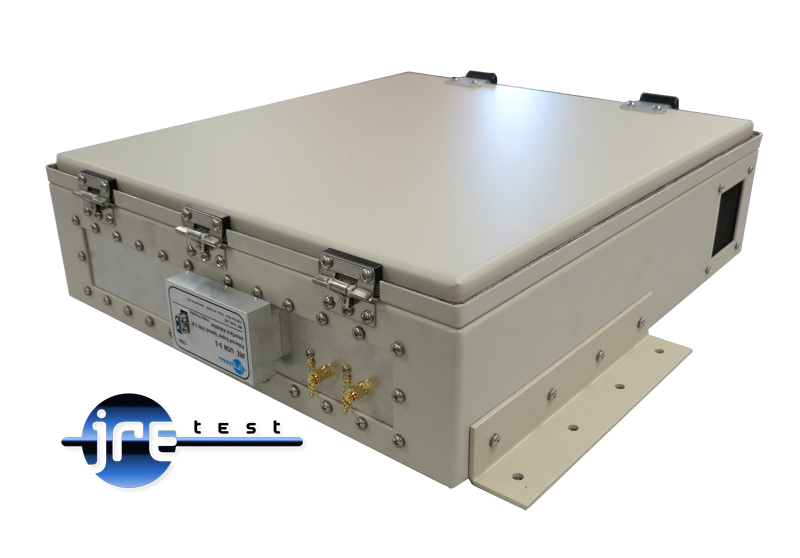
Low-profile enclosure with a 3" H x 14.5" W x 16.5" D interior and two removable A-size I/O plates.
JRE 1618 specifications
- Inside dimensions
- 3" H x 14.5" W x 16.5" D (75 x 370 x 420 mm)
- Outside dimensions
- 4.5" H x 16" W x 18" D (115 x 405 x 460 mm)
- Isolation
- −100 dB DC to 1 GHz, −95 dB to 3 GHz, −85 dB to 6 GHz
- Weight
- 15 lbs (6.8 kg)
- Shipping Weight
- 21 lbs (9.6 kg)
- Shipping Dimensions
- 22" x 22" x 9" (560 x 560 x 230 mm)
- Optional MW Isolation
- > 85 dB to 28 GHz
- I/O Plates
- Two A-size removable plates (2.75 x 6" / 70 x 150 mm)
- RF Absorbing Foam
- 3/4" (19 mm) thick, LS-30, 90°C rating, UL 94V-0
- Construction
- Rugged welded aluminum
- Hinges
- Heavy duty stainless steel friction hinges
- Latches
- Dual latches
- Vents
- Built-in honeycomb vents; optional fan available
- Origin
- Made in USA
JRE 1618 overview
A thin DUT with more wall crossings than height can stay in a compact setup with the JRE 1618. Its low profile suits boards, modules, and multi-connector devices, while the paired removable plates leave room to separate data, power, and RF connections. I would start here when bench area and connector capacity matter together.
- Interior: 3" H x 14.5" W x 16.5" D (75 x 370 x 420 mm).
- Outside: 4.5" H x 16" W x 18" D (115 x 405 x 460 mm).
- Isolation: −100 dB DC to 1 GHz; −95 dB to 3 GHz; −85 dB to 6 GHz.
- Two removable A-size plates, each 2.75 x 6" (70 x 150 mm), provide generous connector capacity.
- 3/4" (19 mm) LS-30 RF absorbing foam reduces internal reflections and hot-spots.
- Built-in honeycomb vents accept an optional fan for warmer DUTs.
- Optional MW configuration provides > 85 dB isolation to 28 GHz.
At $1,550.00 and in stock, it is the practical mid-ladder choice for a low-height DUT. Map every required crossing before the plate is built; RF connectors and interface filters are configured separately. If the DUT needs a wider low-profile footprint, compare the JRE 2214.
Go deeper
- How to Select and Configure an RF Shielded Test Enclosure A practical engineer's guide to sizing an RF test enclosure, configuring I/O plates, choosing filtered data interfaces, power, thermal, and antennas.
- Keeping Your Cool: Heat, Vents, Fans and Airflow in an RF Shielded Test Enclosure Why RF shielded chambers heat up, how to measure real device wattage instead of the label, and how much airflow it takes to hold your temperature rise.
- Mounting Devices Inside an RF Shielded Test Enclosure How to hold your DUT inside a JRE chamber for repeatable RF tests: the removable ABS floor, why plastic not metal, antenna placement and wall drilling.


Tell us what connections your device needs.
Tell us what connections you need to your device under test — USB, Ethernet, RS-232, RF connectors, etc. We'll spec it out with you. No cart, no checkout: you send an inquiry and we quote it.
Ask an Engineer