Patents & Innovation The engineering behind the enclosures.
Most of what makes a JRE enclosure work — the way you reach in without breaking the shield, the window you can see through at microwave frequencies, the data that crosses the wall clean — traces back to a patent John Ramsey wrote. This page records them and points each one at the products it makes possible.
How to read this
Patents we can point to, on the products that use them.
John Ramsey is named inventor on seven granted US patents from across four decades of RF engineering. Four are live and cover features you can buy today; three are expired and in the public domain, and together they record how the work got here. We list them plainly because a technically literate buyer should be able to check the claim against the part — not because a patent number is a sales pitch.
The honest version is the more useful one. Benchtop shielded boxes existed before John; what he originated was the operator-accessible design — the hands-in enclosure you can reach into while the shielding holds — and he kept extending it: the bare-arm sleeve, the shielded window, the high-speed filters. Each entry below links down to the product that exercises the patent and up to the application it enables.
The portfolio
John Ramsey's patents
Seven granted US patents, with John Ramsey named as inventor on each. Four are live and map to current products; three are expired and read as heritage — the lineage the live work was built on.
-
Isolation chamber with unimpeded hand entry
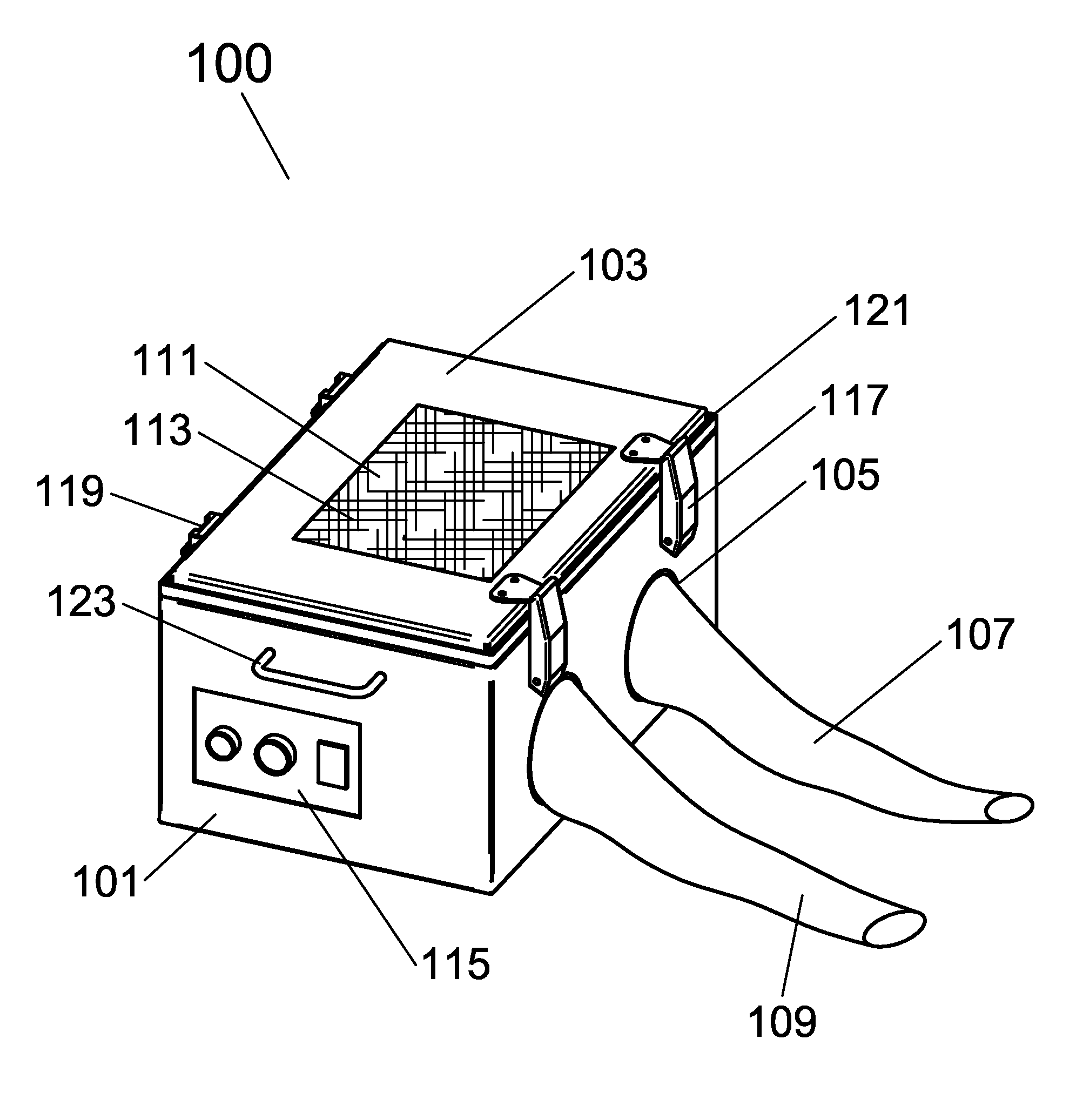
FIG. 1 · US 8,294,044 · US grant drawing An elastic conductive sleeve lets you put a bare arm into a fully shielded chamber and work the device by hand — the operator's own arm completes the shield, so you work bare-handed with nothing to short a bare board. This is the patent the forensics enclosure is built around: an analyst can manipulate a seized device while isolation and chain of custody hold.
-
Low-impedance RF shielded window
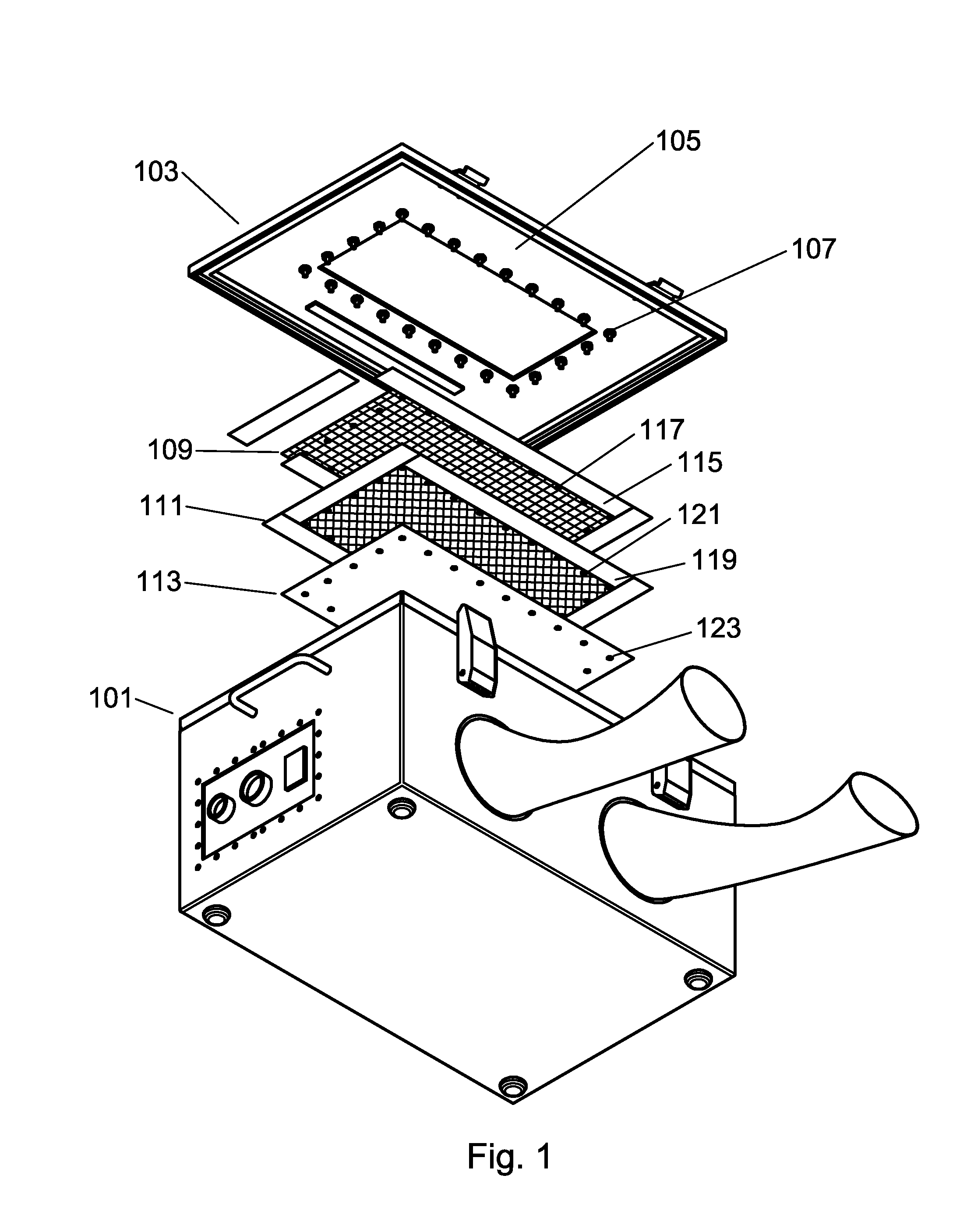
FIG. 1 · US 9,497,894 · US grant drawing As testing moved into the 2 GHz / microwave range, the viewing window became the weak link. This design gives each layer of the window its own parallel path to ground instead of daisy-chaining them, which stops the upper layers' ground from "lifting" — so you keep isolation and still see what you are doing at high frequencies.
-
RF filter with improved attenuation of common-mode signals
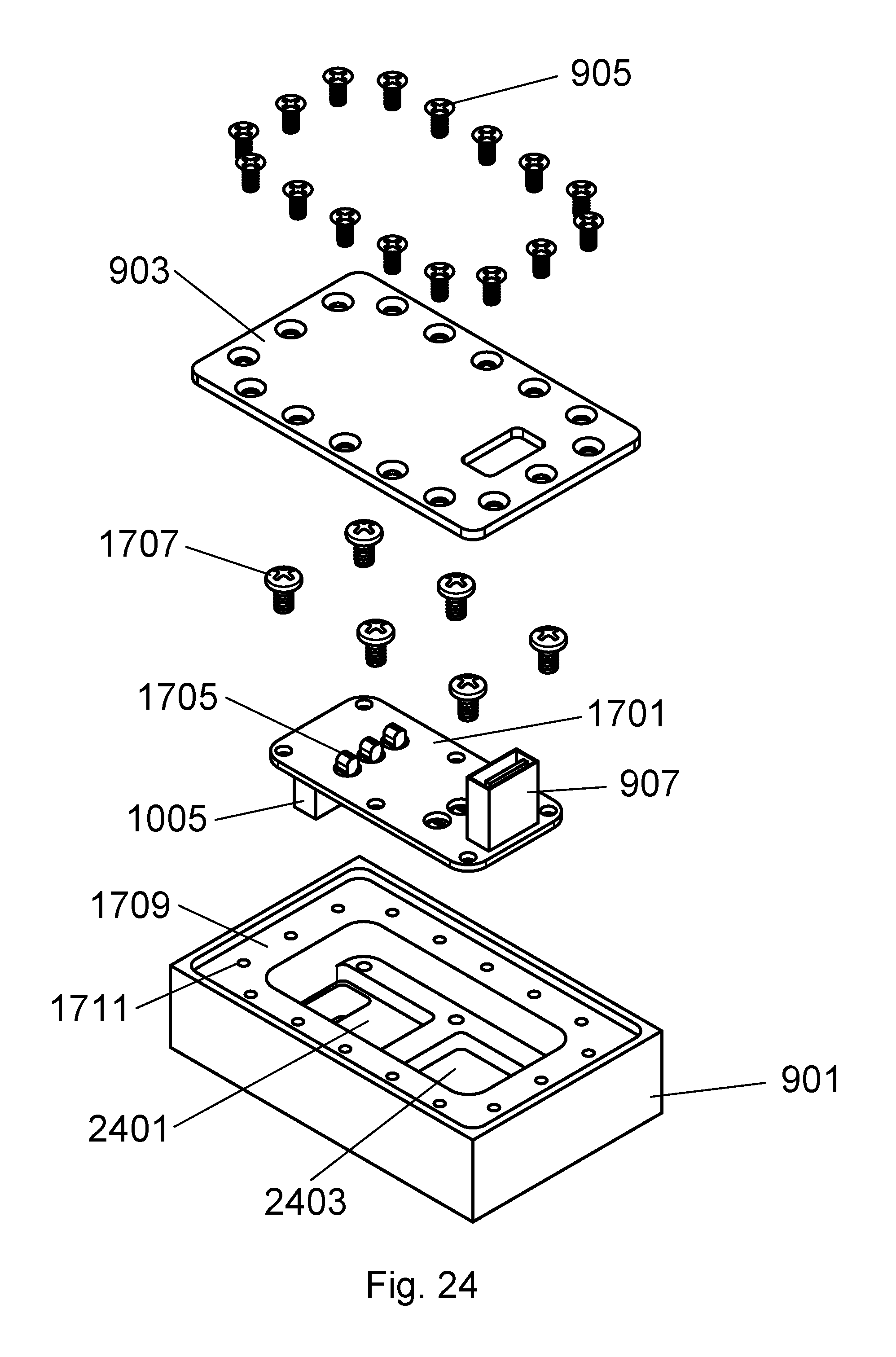
FIG. 24 · US 10,374,572 · US grant drawing A mode-selective filter: it discriminates by signal mode, not frequency. Differential data passes through with no upper frequency limit, while common-mode RF is low-pass filtered out — even when the interference sits at the same frequency as the data. That is what lets USB 3, USB-C, 10G Ethernet and HDMI cross a shielded wall on a passive copper feedthrough.
-
Common-mode RF data filter (continuation)
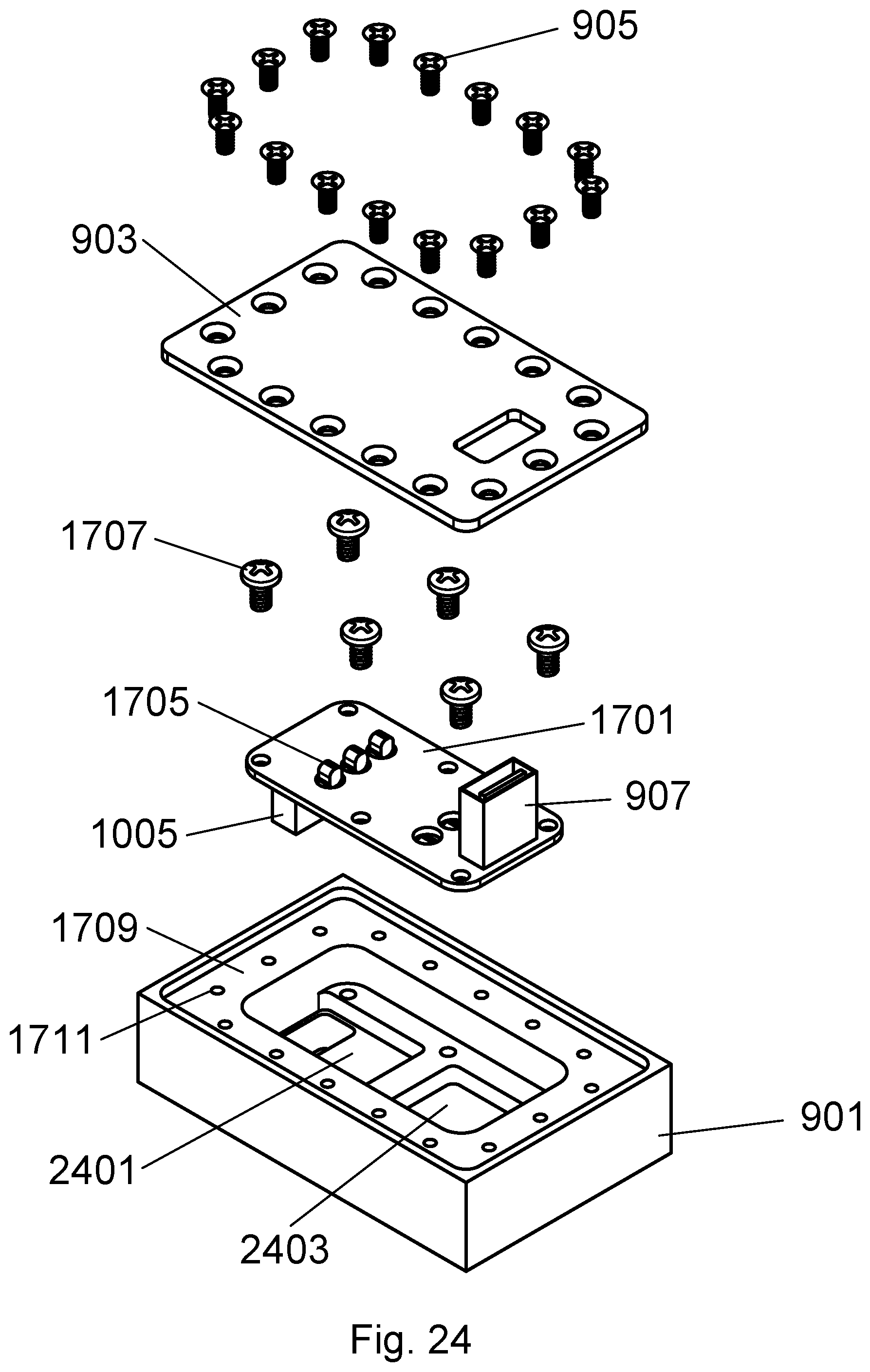
FIG. 24 · US 10,644,670 · US grant drawing The companion to 10,374,572, continuing the same mode-selective filtering work. Together the pair is the reason JRE can put a passive, in-band, conductive (not fiber) high-speed feedthrough on an enclosure wall — no firmware, no microcontroller, no interception path.
-
Electromagnetic isolation chamber
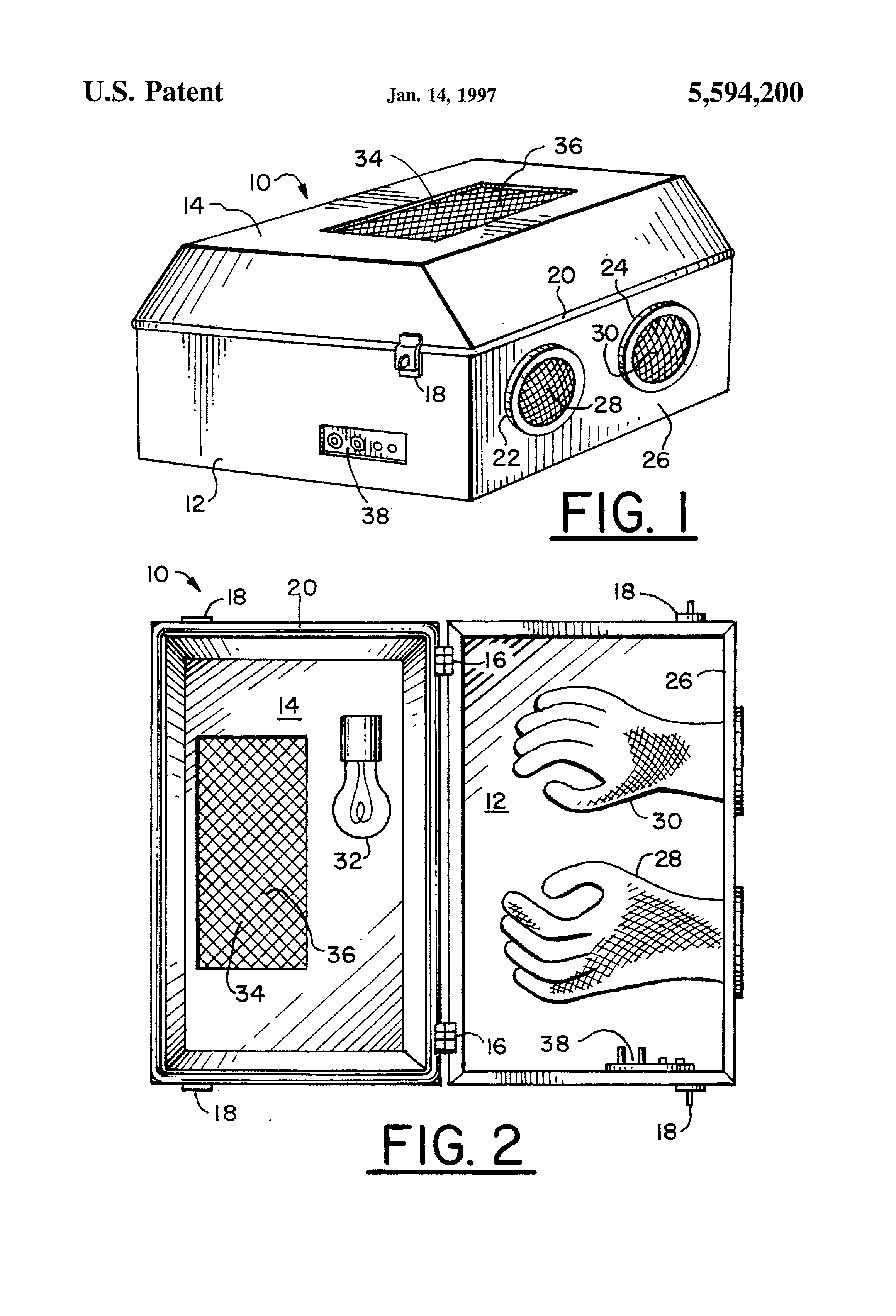
FIG. 1 and FIG. 2 (combined on one sheet) · US 5,594,200 · US grant drawing The origin patent for the operator-accessible enclosure — the design that started the whole line. It described reaching into a shielded chamber to manipulate a device by hand, and it was cited by dozens of later patents. It is in the public domain now; we keep it here as the priority record, not as a current exclusivity claim.
-
IR detector against a bright background
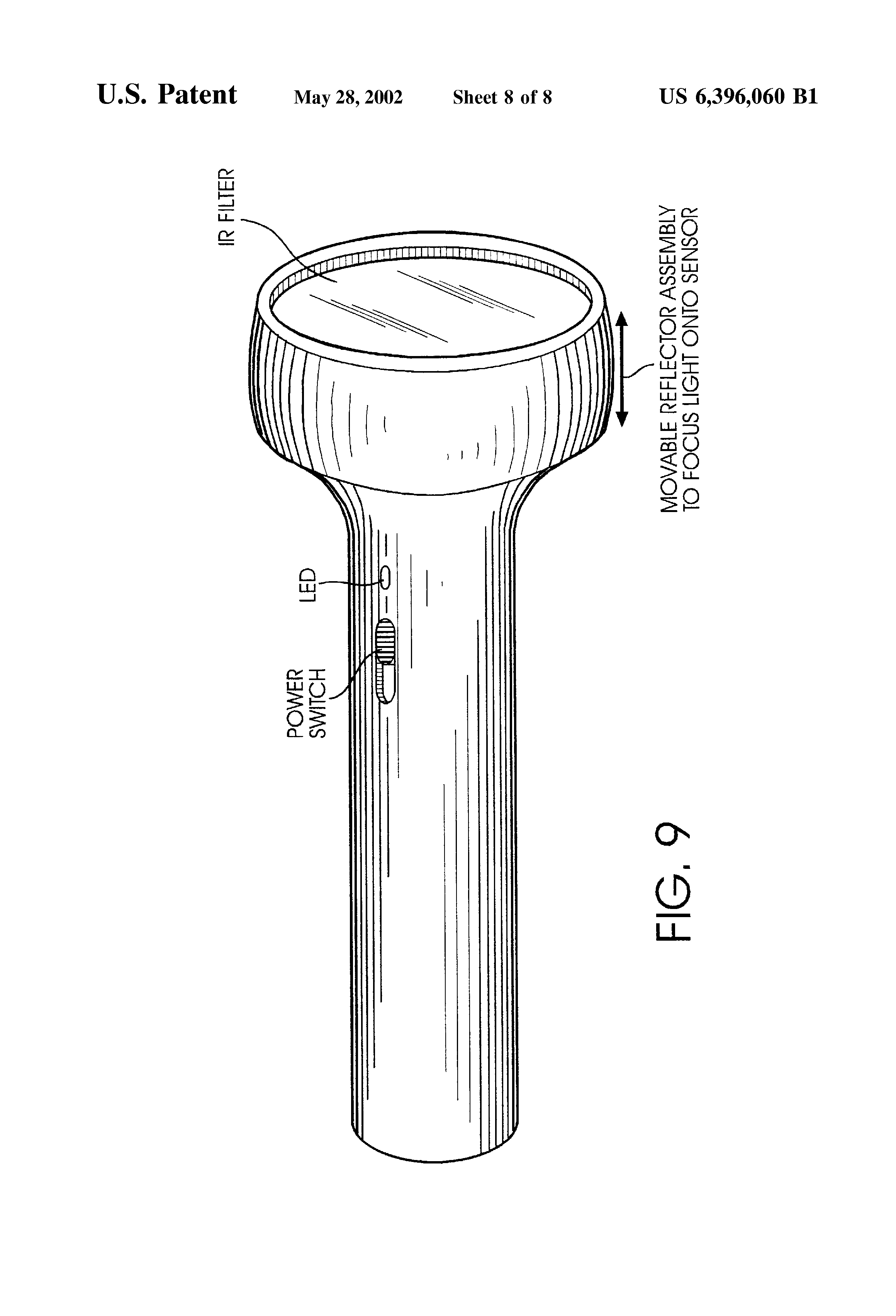
FIG. 9 · US 6,396,060 · US grant drawing A military night-vision lighting patent — an infrared detector that worked against a bright background for aircraft collision-avoidance. It built no enclosure, but it is part of the founder's defense-electronics record across thirty years of RF work.
-
Non-radiating aircraft-band radio
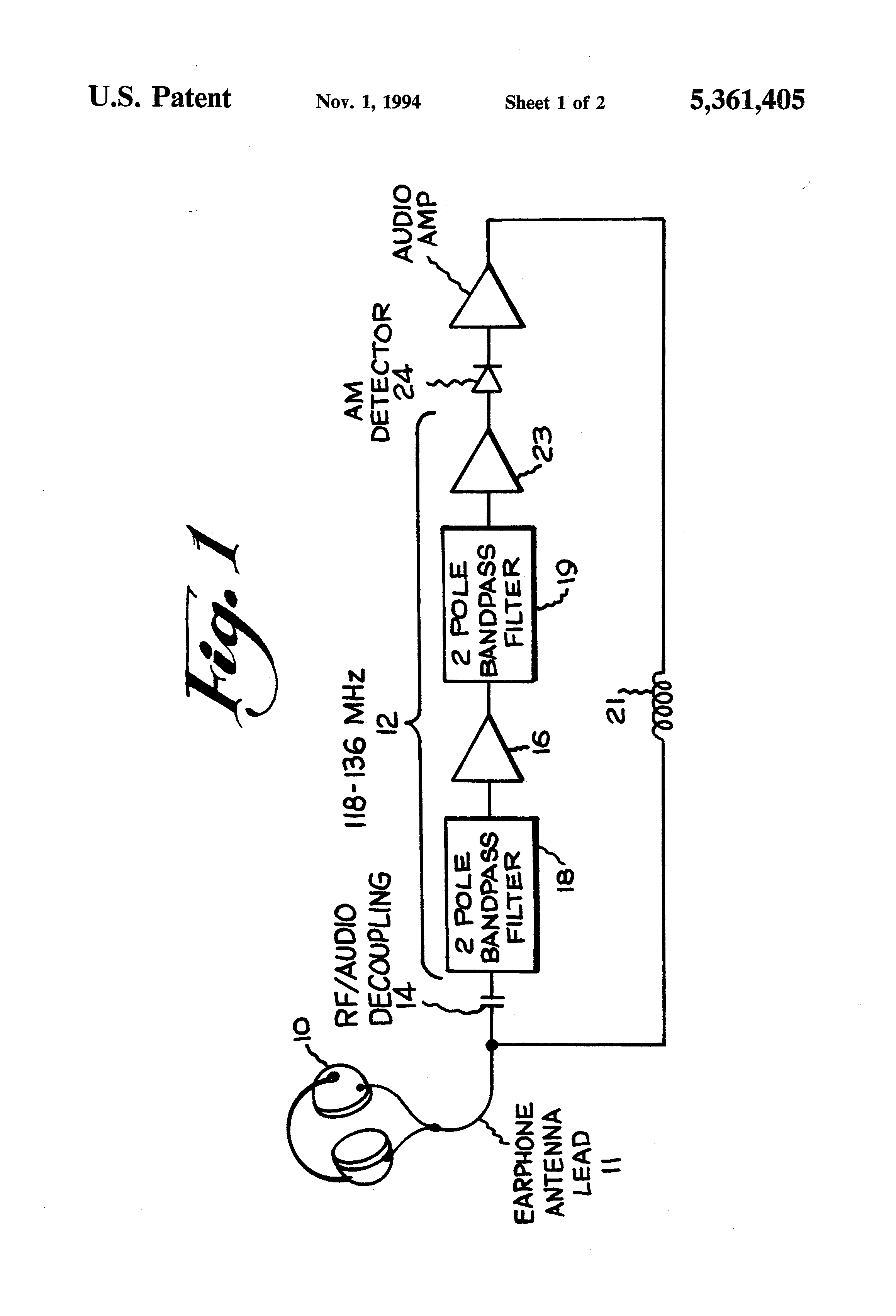
FIG. 1 · US 5,361,405 · US grant drawing An early patent for a non-radiating aircraft-band radio. Heritage: it marks the start of the founder's published RF work, well before the test enclosures.
Patent numbers are US grants naming John Ramsey as inventor. Filing and expiry dates are as shown on Google Patents. Each can be read in full on Google Patents.
Tell us what connections your device needs.
Tell us what connections you need to your device under test — USB, Ethernet, RS-232, RF connectors, etc. We'll spec it out with you. No cart, no checkout: you send an inquiry and we quote it.
Ask an Engineer